Prey
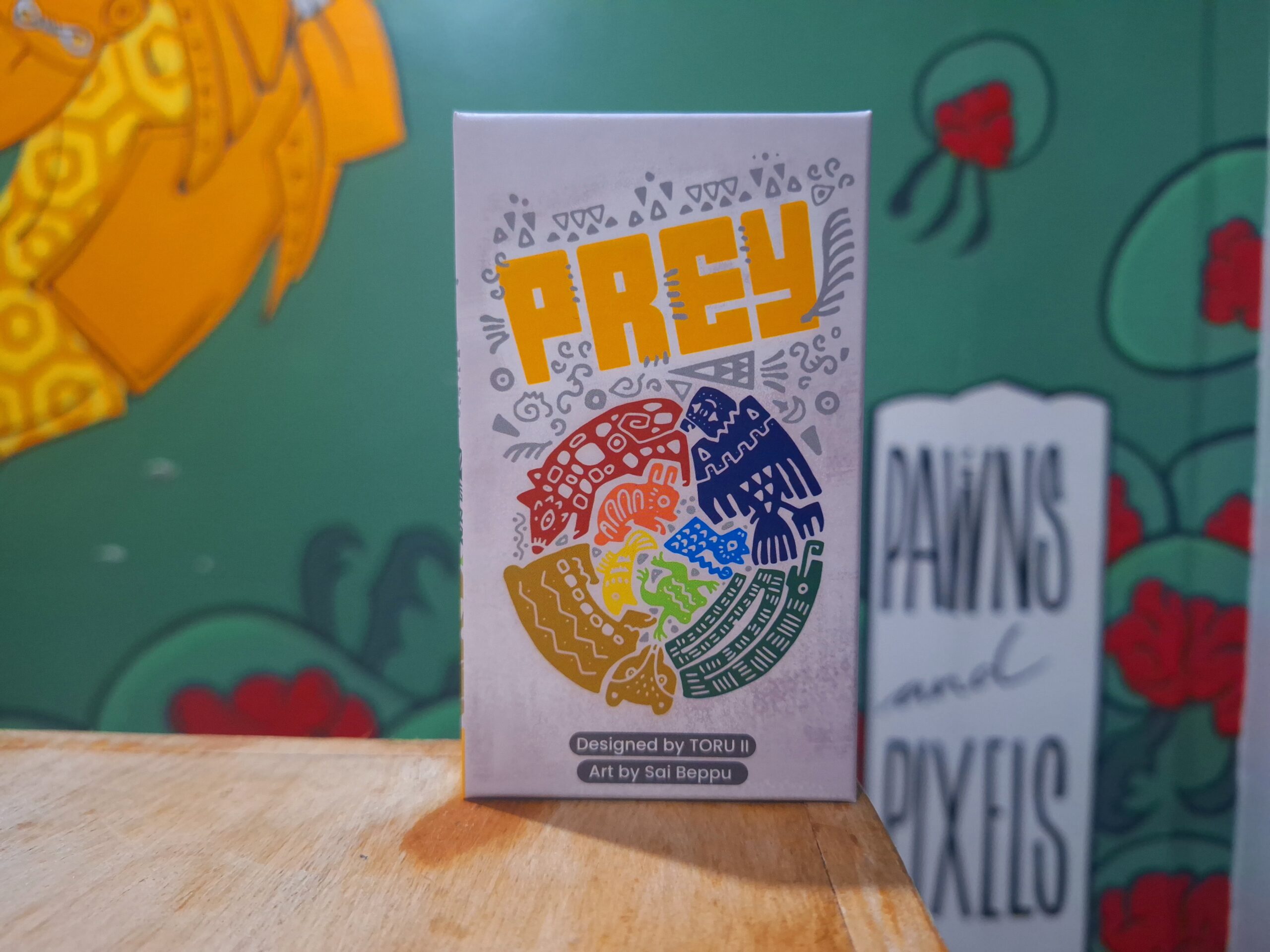
A trick-taking game published by Allplay where players play tricks over 12 hands in order to try and reach a bid number determined by dice.
How the game works?
The objective of Prey is to win points by successfully achieving at least one of the bid numbers determined by two dice you roll at the start of the round. Rolling doubles results in a re-roll and rolling a 6 means your bid can be either 0 or 6. Players play through 12 hands of tricks with cards flipping upside down half-way through. The first half of the game is played using the darker colored side (the predator) and the second half using the lighter colored side (the prey). Once a player/(s) has achieved 2 points, the game ends.
Gameplay and thoughts
In traditional trick-taking bidding games you choose a number of hands you think you will win based on the cards you were dealt and hope you get your bid correct. Prey changes this up in two major ways:
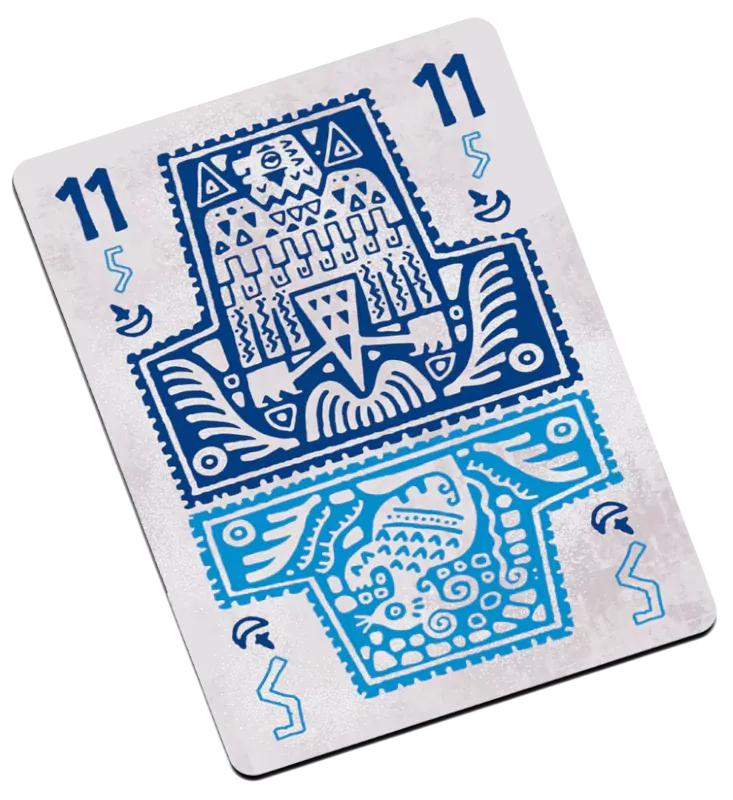
Firstly, these double numbered cards are essentially the meat-and-bones of the game as the strategic nature of Prey really shines through deciding which cards you want to keep for the Prey section. Playing weak cards during the Predator phase means that you will have stronger cards during the Prey phase and vice versa. This really causes you to think carefully, as your strong cards will turn into weak cards during the Prey phase due to the inverse numbering on the cards. A real balancing act is required to successfully find a way to manipulate your hand in preparation for the second phase of the game where you can gain that sense of euphoria when everything falls into place… or inadvertently falls apart!
Fortunately the designers of Prey have thought about this, which leads me to the second major way this differs from other standard bidding games – dice.
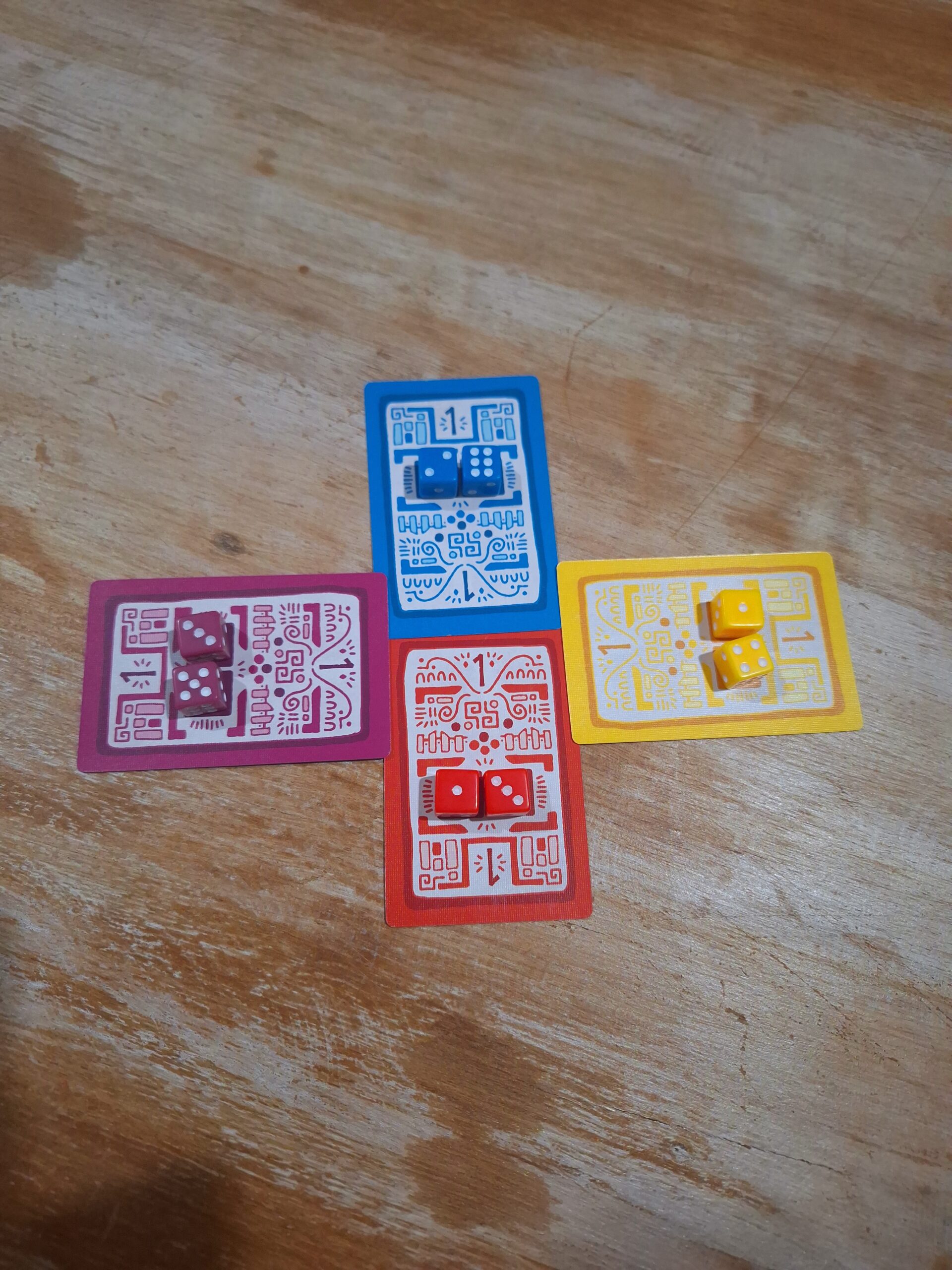
This element was a neat touch which I thought gave the game great flexibility. If you roll a 1 and 4 for example, should you win 2 hands of cards by accident you can aim for the 4 instead. Hand management is an integral part of this game which I thought works really well with having different options of bids to aim for. Keeping an eye on each other’s dice, what suits have been flushed out and what cards to save all add for a thinky little game.
Prey, while strategic, has moments of laughter and chaos as you choose to deliberately win or lose tricks to force other players to fail their bid, whilst keeping your own options open due to having two separate bids you can work for. Overall I think this is a nice little introductory trick-taker and warmup game for those looking for something that’s lightweight and great value for money. For 10-15min I think Prey hits the sweet spot to get the creative juices flowing and hits our gaming table frequently to begin the night.
Pros
- Beautifully designed artwork and clear scoring system
- Card flipping adds deeper strategy
- Dice – while random – provide greater flexibility since you have multiple choices of bids to achieve
- Rules are extremely easy for beginners to pickup and start playing straight away
Cons
- Tendency to get stuck if you flush out of certain suits early on
- No tie-breaker results in multiple or all players winning sometimes as the game is only first to 2 points
- Beginners get confused which shade of color to choose sometimes
Would I recommend this?
For a warmup game I think this is great value for money. It’s affordable, compact, doesn’t overstay its welcome and has enough replayability in it to continue being brought out to a game night.